scale prevention
Combat Scale. Boost Efficiency.
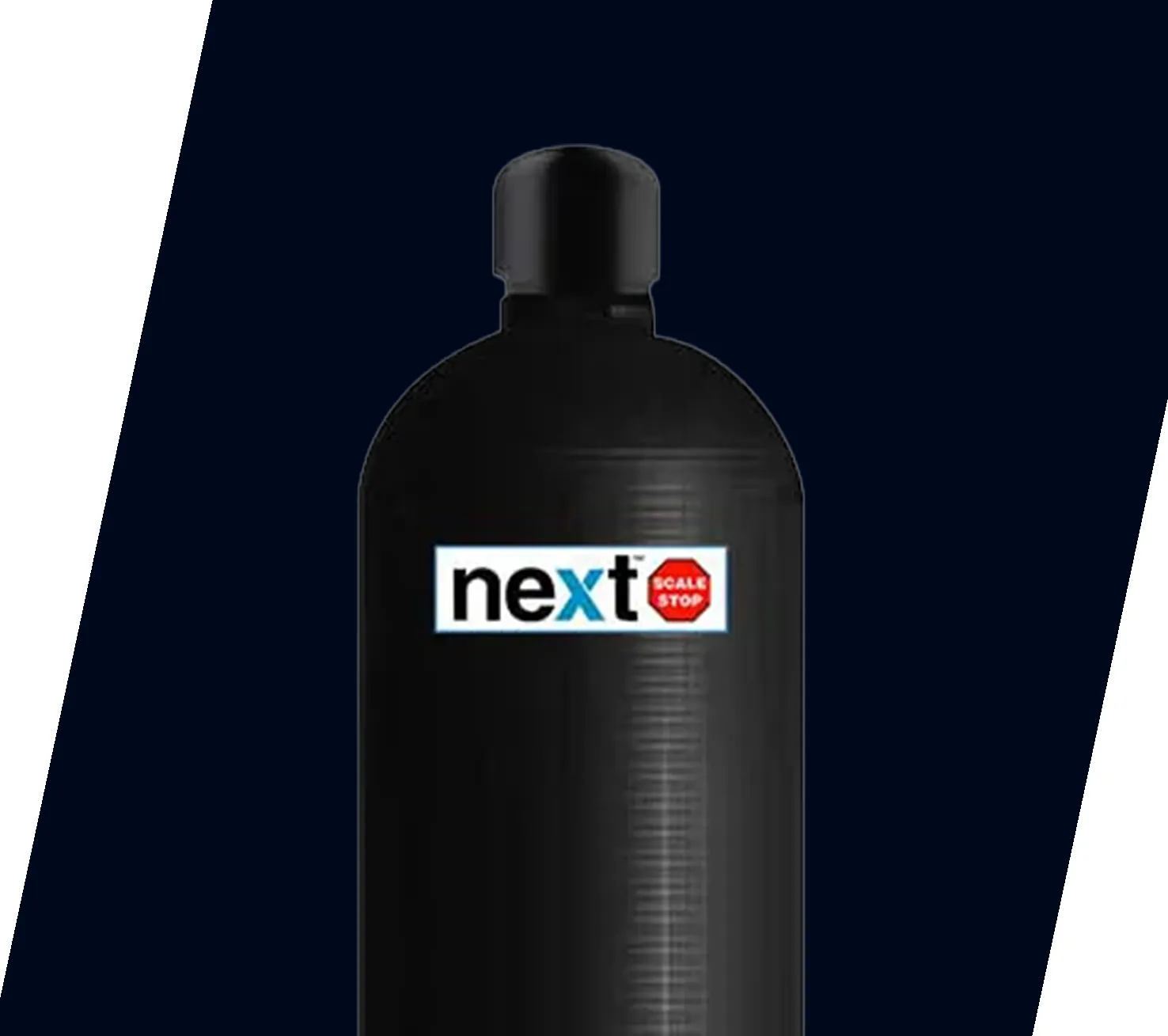
Next-Scale Stop™ utilizes advanced, cutting-edge technology to deliver most of the benefits of water softeners. At the core of its performance is TAC® (Template Assisted Crystallization®), the first proven, reliable, and chemical free method for preventing scale buildup, and with zero environmental waste.
ScaleStop™ is not a water softener, ScaleStop™ protects your home's plumbing and appliances by preventing scale buildup without the use of salt or harsh chemicals. It works by transforming dissolved hardness minerals, into microscopic crystals. These crystals remain suspended in the water and are less likely to stick to surfaces, meaning they won't accumulate inside pipes, water heaters, showerheads, or on glass and fixtures. The result? Cleaner appliances, better water flow, and reduced maintenance.
Features
Upflow Filtration
Non-Electric System
High Flow Capacity
Removes Existing Scale Deposits
What is Template Assisted Crystallization®? (TAC®)
Next-ScaleStop™ uses advanced Templated Assisted Crystallization® (TAC) technology to prevent scale buildup. This innovative process works by forming microscopic crystals of calcium carbonate (CaCo3) on the surface of specially treated polymer beads. These crystals act as templates, attracting additional hardness minerals from the water as they precipitate. Because the crystals are stable and relatively insoluble, they keep the calcium carbonate suspended in the water rather than allowing it to stick to pipes, fixtures, or appliance effectively protecting your plumbing system from scale.
TAC® Technology
Crystal Formation
The surface of small polymer beads attract scale-causing ions, creating micro-crystals that become preferential templates for other ions to build on.
Crystal Release
Once the crystals grow to certain size they continue to flow through the pipeline. The crystals in solution keep the hardness out of the water so that it can’t form scale or interfere with soap.
This process inactivates the minerals, causing them to flow right through pipes and down the drain, completely unnoticeable without specialized technology.

Scale Reducing Protection
Home Protection a with Pre-filter and Scale Reducer. The prefilter works alongside the scale reducing system to remove sediment and impurities before treating your water. This two-step process protects your plumbing and appliances from scale, and particles, ensuring cleaner, clearer water throughout your home with minimal maintenance.
(NSS948 and NSS1054 models only)

Triple Protection
Whole Home Protection with Kinetico's Chloramine Filtration System and Next-Scale Stop.™ Protect your home with the powerful combination. A premium solution for treating scale buildup, chloramines, and sediment. This advanced, salt-free water filtration system is ideal for residential homes using municipal water, helping extend the life of household appliances. Enjoy cleaner water from every tap with a low-maintenance system that delivers reliable, scale reducing solution with the extra protection by Kinetico.
(NSS1054 and CRS 1100 models only)
Certifications
Kinetico Chloramine Reducing Systems have been Tested and Certified by the Water Quality Association according to NSF/ANSI 42, Drinking Water Treatment Units-Aesthetic Effects for the reduction of chloramine (as monochloramine), NSF/ANSI/CAN 61, Drinking Water System Components-Health Effects, NSF/ANSI/CAN 372, Drinking Water System – Lead Content and the CSA Standard B483.1 – Drinking Water Treatment Systems.
Next-ScaleStop™ is tested & certified by the Water Quality Association to NSF/ANSI/CAN Standard 61, and NSF/ANSI/CAN 372 Lead Free requirements.
What is Chloramine and why is it used in Tap Water?
Chloramine is a disinfectant commonly used in public drinking water systems. It’s created by combining chlorine -the standard disinfectant used in most municipal water-with ammonia. Unlike chlorine, chloramine is not sold in stores; it must be produced onsite at water treatment plants.
Chloramine is more chemically stable than chlorine, which means it stays in the water longer as it travels through pipes to your home. This helps ensure your tap water remains clean and safe all the way to your faucet. It also produces fewer disinfection byproducts (DBPs), which can form when chlorine reacts with organic material in water. Because of this, chloramine is becoming a preferred method for disinfecting public water supplies.
The U.S. Environmental Protection Agency (EPA) regulates the use of chloramine in drinking water. The maximum allowable level is 4 milligrams per liter (mg/l), or 4 parts per million (ppm), which is considered safe for daily use in residential homes.
Across the United States, nearly 250,000 public water systems provide water to around 90% of the population. Approximately 98% of these systems use either chlorine or chloramine as part of their water treatment process. Each year, your local water utility is required to send out a Consumer Confidence Report – also called an Annual Water Quality Report. This report details where your water comes from, how it’s treated, and what’s in it, including levels of chlorine or chloramine.
Can Chloramine be removed from Tap Water?
Just like chlorine, chloramine can be removed from household water using either whole-home or point of use carbon filtration systems. However, removing chloramine is more challenging due to its chemical stability.
Chloramine is a more stable molecule than chlorine, meaning it requires a more reactive filtration media and longer contact time to be effectively removed. While standard activate carbon-whether coconut shell or coal based is highly effective at removing chlorine, it does very little to reduce chloramine levels.
There’s a common misconception that regular activated carbon removes chloramine by stripping away the chlorine and leaving only ammonia behind. In reality, standard carbon does not break apart or neutralize chloramine molecules effectively. If your home currently uses a standard dechlorination system, it’s important to know that it likely does not reduce chloramine. To property treatment chloramine, you need a system specifically engineered for it.
Kinetico’s Chloramine Reduction System (CRS) features its proprietary media Chloraban®, which is specifically designed to reduce both chlorine and chloramine from your water supply. In fact, Kinetico CRS systems are the only residential whole-house chloramine reduction systems certified by the Water Quality Association (WQA).